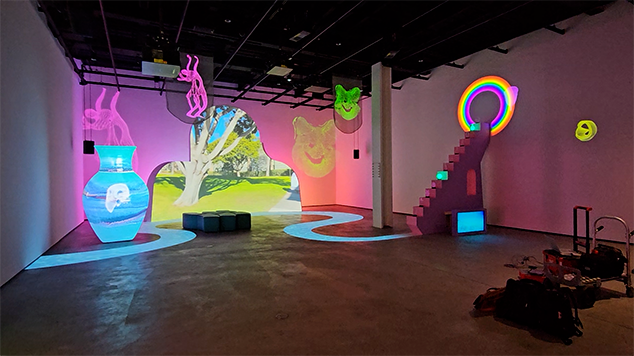
After more than a year of renovation, the Akron Art Museum is preparing to reopen its historic 1899 Building, creating new spaces for art, interaction, and digital experiences. Behind the new galleries is an AV system designed around a simple goal: give artists powerful technology while making that technology easy for museum staff to operate every day. The new environment brings together Q-SYS integrated control, BirdDog networked video, and Panasonic projection and mapping technology to support multimedia artwork and changing exhibitions.
See what’s new at the Akron Art Museum with reopening of 1899 building
Making Sophisticated AV Simple
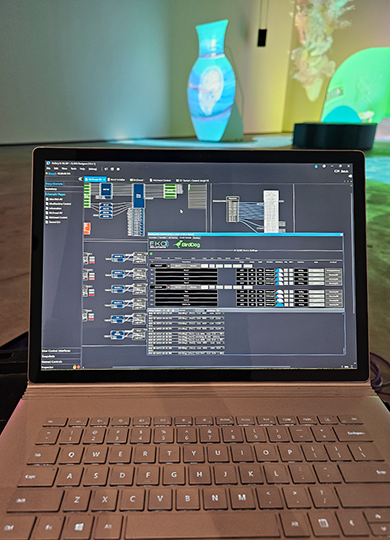
The challenge in a project like this isn’t simply installing technology. It’s integrating multiple systems so they behave like one system, that’s where Q-SYS plays a central role.
Instead of museum staff having to operate individual projectors, audio components, video sources, and other AV equipment separately, the integrated Q-SYS control environment simplifies those functions into intuitive daily operations. Routine activities such as starting an exhibition in the morning, selecting sources, controlling projection, managing audio, monitoring equipment, and shutting systems down at the end of the day can be brought together through a consistent control experience. That matters in a museum, where the people operating an exhibition shouldn’t need to be AV technicians and it also creates consistency. Whether it’s the first employee opening a gallery on Wednesday or someone else operating it over the weekend, the system is designed to provide the same experience.
The technology can be sophisticated without being complicated to use.
Turning the Gallery Into a Canvas
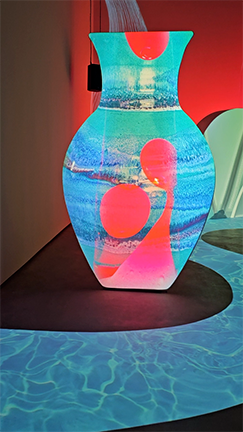
That philosophy becomes especially important with Panasonic projection and projection mapping. In a traditional AV environment, a projector is typically pointed at a rectangular screen. In an art museum, projection can become part of the artwork itself. Projection mapping allows imagery to be carefully positioned and aligned with the physical gallery environment, essentially allowing architectural surfaces to become part of the visual canvas. That’s particularly relevant as the renovated building introduces Shana Moulton: Meta/Physical Therapy. The renovated building also includes spaces specifically intended to expand what the museum can present, including the immersive J.M. Smucker Co. Idea Machine gallery and the MacDowell Gallery, a black-box environment designed for video, digital, and time-based art.
Building for Today and Tomorrow
BirdDog networked video adds flexibilityIn an environment where exhibitions continually change, AV infrastructure can’t be designed exclusively around what is presented in the gallery today. The next artist may have completely different requirements. Moving video through the network gives the museum greater flexibility in how video sources and destinations can be connected and managed. Combined with integrated Q-SYS control, that creates an AV infrastructure designed not just for opening day, but for the changing needs of future exhibitions.
The Technology Visitors Shouldn’t Notice
Some of the most important work on the 1899 Building will never be visible to the public. It’s the programming, configuration, signal routing, projection mapping, alignment, testing, troubleshooting, and commissioning required to make all of these systems operate together reliably. Before the doors open, every detail matters. When visitors enter the historic 1899 Building this week, they won’t be thinking about Q-SYS programming, BirdDog video distribution, Panasonic projectors, or the mapping and calibration behind the images they see. They’ll experience the new galleries, the installations, and the art. And that’s exactly the objective.
Great AV integration isn’t about putting technology in front of the visitor. It’s about putting technology behind the experience.